Hearst Magazines

- ClientHearst
- IndustryMedia & Publishing · Media & Entertainment
- CapabilitiesProduct Services · Data, Analytics, AI/ML Services · Audience insights · Content strategy · Data Strategy & Architecture · Audience segmentation
Unifying magazine sites without losing each brand’s identity
For a publisher like Hearst, scaling digital across a large portfolio of magazines often meant building separate experiences for each title to preserve a distinct look, voice, and editorial rhythm. That approach protected what made each brand feel unique, but it also made it harder to reuse capabilities and keep improvements moving consistently across the network.
The challenge was to establish shared digital foundations that could flex for different kinds of publications without flattening brand identity. Our work helped Hearst move toward a more unified, scalable approach that supports faster rollout and easier evolution across properties while keeping each magazine unmistakably its own.
Key Takeaways
Enhanced brand identity and ad strategies.
Improved efficiency with unified CMS.
Positioned for growth and innovation.
Strengthened foundation for consistent cross-brand publishing.
The Business Problem
This was the first time we tackled a challenge this systematic and extensive, and it set the bar for what was to come with future engagements like Bloomberg and The Huffington Post.
The system gave Hearst the ability to optimize sites, spin off new sites, create immersive storytelling experiences, utilize data, unify workflows, and extend ad opportunities.
We like to think that this has fueled the publisher’s ambitions for a more integrated, efficient future of digital publishing.
The Insight
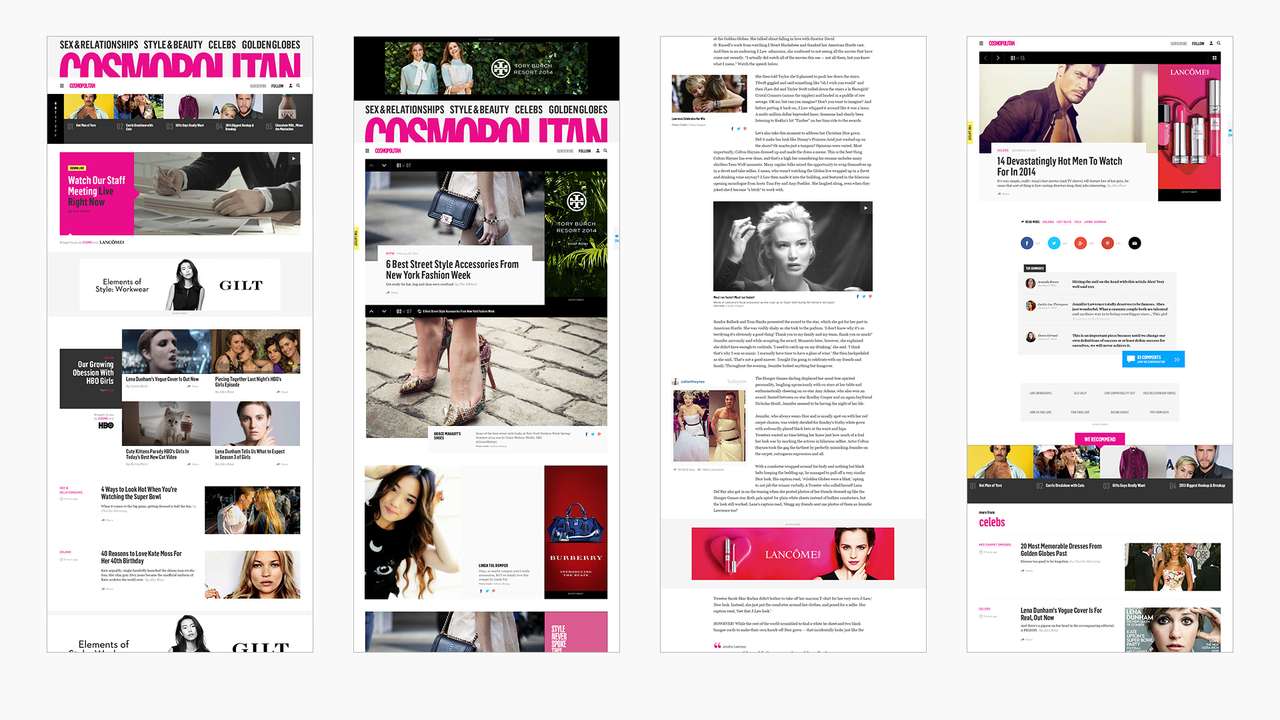
At a time of extreme change within the category, Hearst brought on Troy Young to lead the reimagination of what their digital magazine business would become. At the center of this vision is an efficient network of sites under a single digital architecture, powered by a single CMS.
At Code and Theory, we shared Young’s enthusiasm for this model. Hearst boasts some of America’s finest magazines, an exceptional and diverse range of content, vast reach, and a massive global distribution mechanism. We were energized by the opportunity to match the company’s digital experience to its physical publications.
The Solution
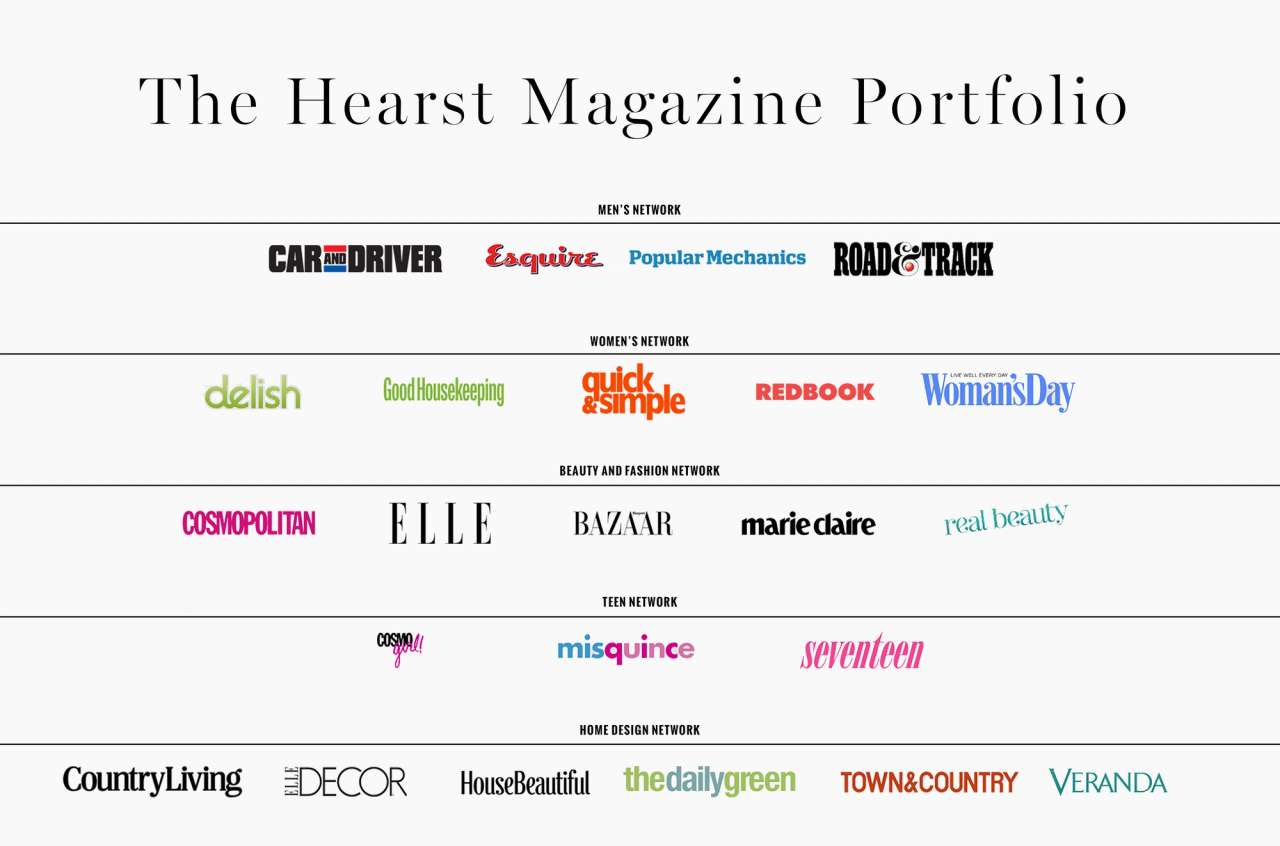
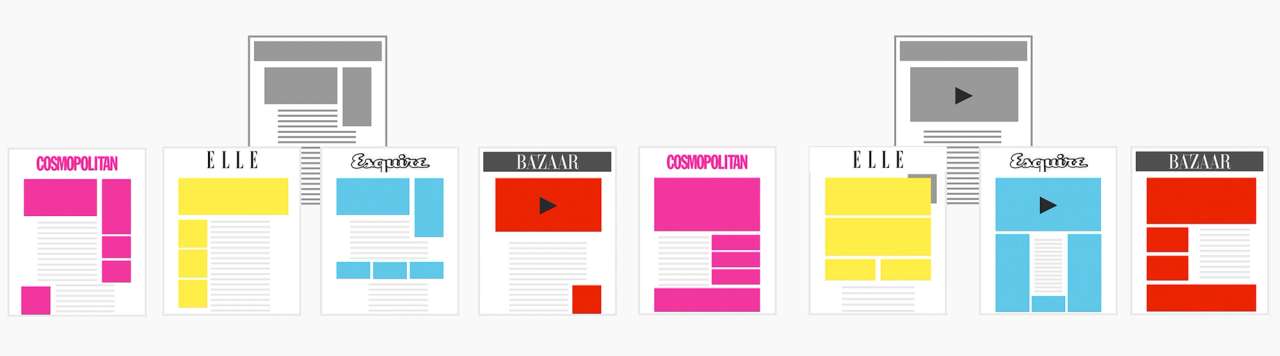
In order to understand what this new digital system would have to accomplish, our analysts and strategists set about exploring Hearst’s roster of publications. We grouped each title into one of three categories, or tiers. At the top tier were marquee publications like Cosmopolitan, Esquire, and Elle, with high content velocity and active, expansive readerships. In the middle were utility-based publications like Car and Driver and Good Housekeeping, which attracted readers with the intent to do research. And at the lower tier were the slower, more specialized lifestyle publications such as Elle Decor, Veranda, and Southern Living.
After determining a general hierarchy of needs for all of these magazines in digital, the system would have to scale up for the marquee publications that churn out a high volume of content while still offering a rich and flexible digital language for more focused publications with lower content volume.
The Results
From Months to Moments
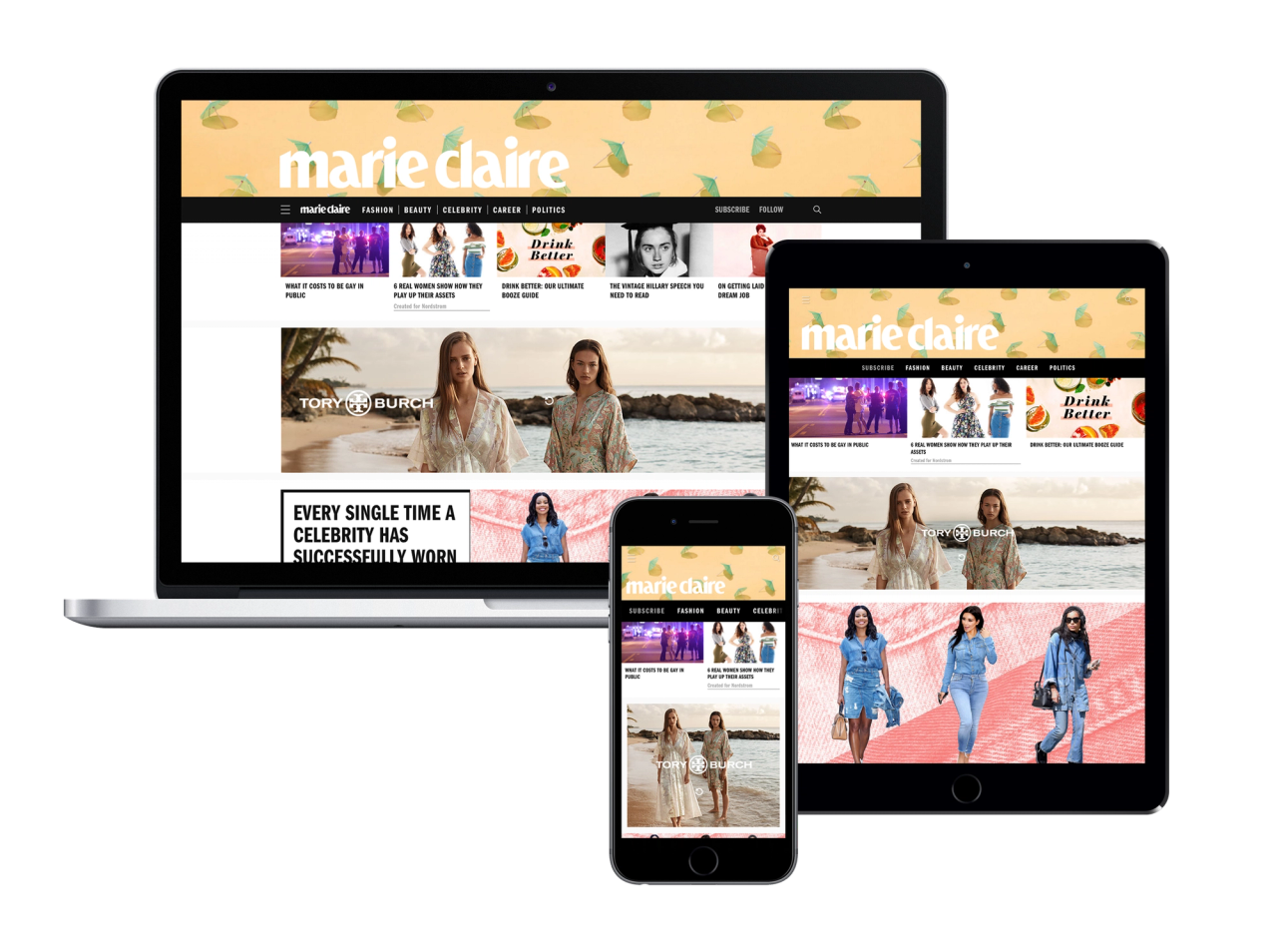
It used to take months for Hearst to get new sites up and running. Our new digital system, however, is designed for speed and efficiency. Now, new magazine sites can be pushed online in a matter of days.
Finite but Connected
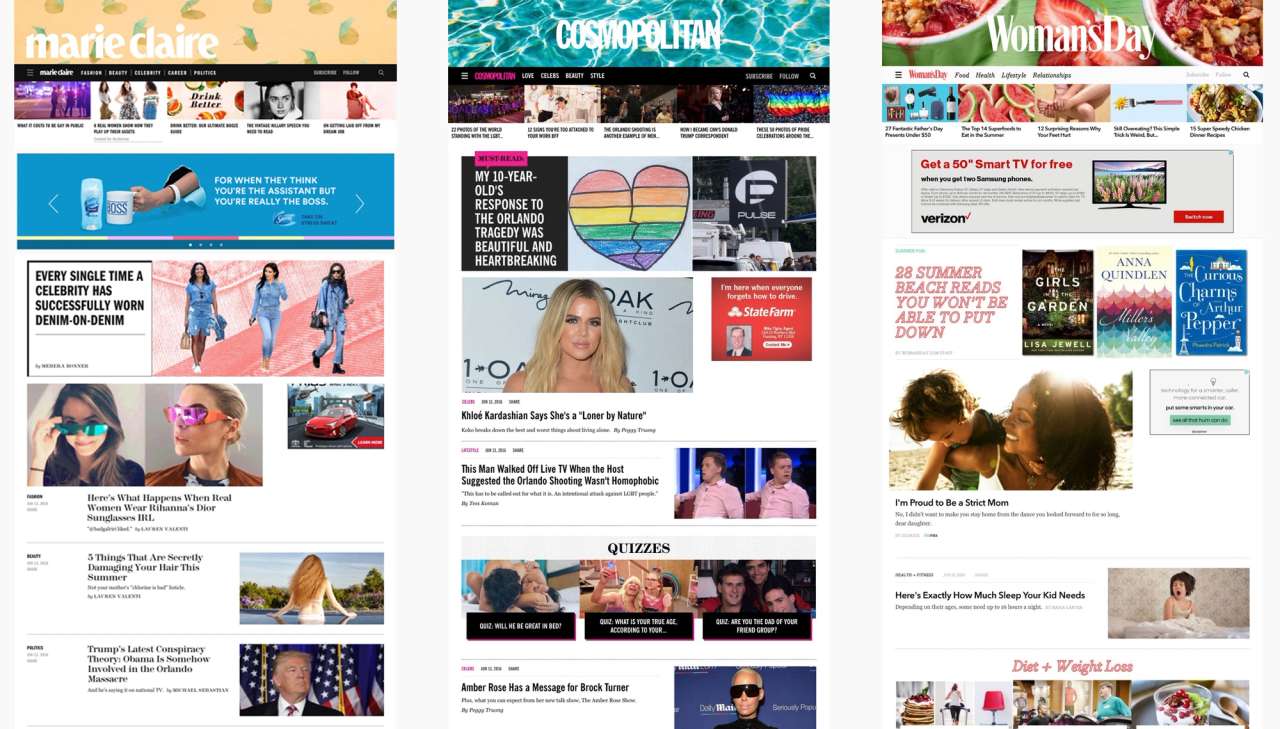
Because the system was built as a unified, single system, Hearst can optimize modules across properties instantly. For example, if a gallery module worked well for Elle Decor, Cosmopolitan can adapt it easily for their identity.
True to Identity
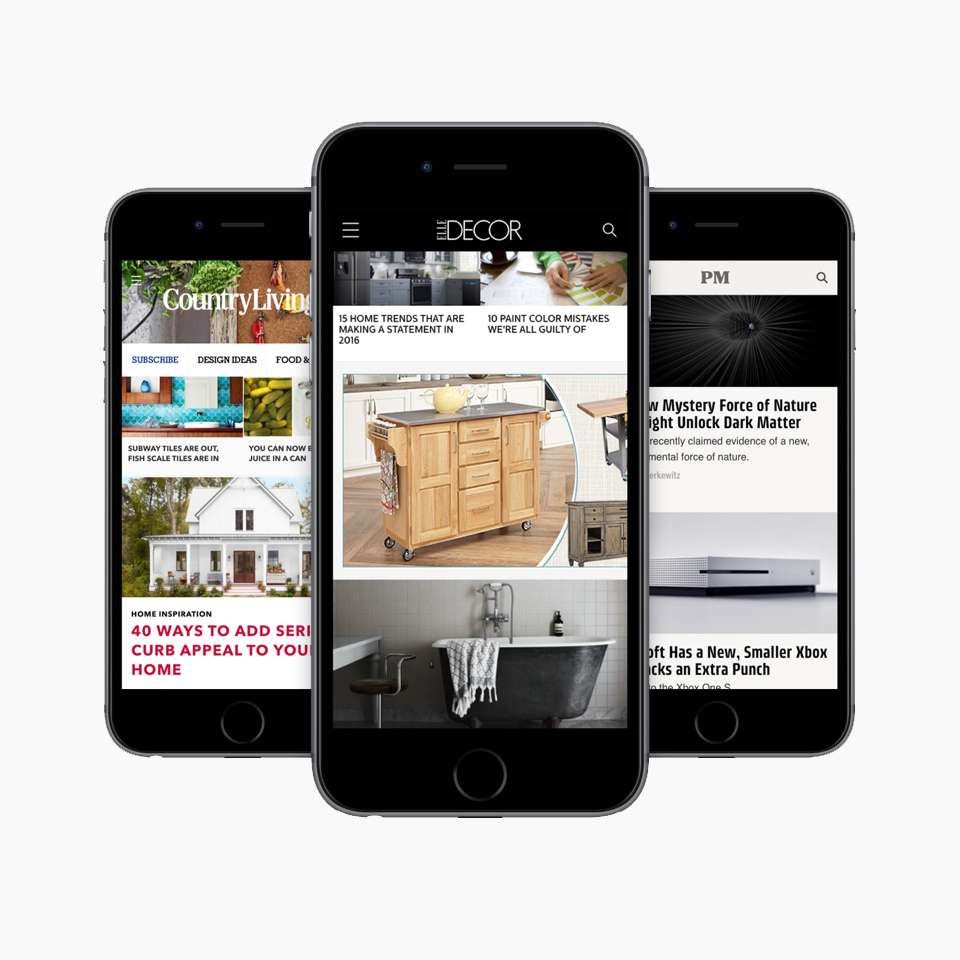
We were extremely careful to honor the brand identity of each publication. The system is standardized in terms of structures and strategies, but from a brand perspective, each site feels differentiated and unique.
Unified Ad Offering
Since our digital system was standardized around these three tiers, an ad innovation that occurs on one property can be easily and seamlessly extended across the others. From a business strategy perspective, this brought significant efficiencies to Hearst. By centralizing all ad offerings on the same ad map, the company could sell ad inventory across publications. While many publishers sell ads across properties, it is much easier to have everyone on the same system. The benefit for advertisers is also significant: because the system is entirely unified, they can create one custom ad architecture and know that it will work across the entire network.
A Unified Editorial Network
Bringing Efficiencies to Content
With this efficient, high-velocity content system, Hearst doesn’t have to sacrifice quality of content for speed, flexibility, and personalization. Not to mention there are huge benefits to quality in relying on a single editorial library. Hearst can now be far more programmatic with its content presentation, combining and connecting interrelated content from across properties for a more immersive, multidimensional experience.
Data Is Power
The network’s unity makes it easier than ever for Hearst’s magazines to collect data on its readers across properties—meaning more personalization and more sophisticated content strategies. Additionally, if analytics indicate the need for an optimization on one property, all magazines now have the opportunity to benefit.
What We Did
Replatformed the CMS to modernize publishing workflows and reduce editorial friction
Built a scalable platform foundation to support multiple magazine brands and teams
Delivered updated brand identity assets and guidelines for consistent digital experiences
Integrated data sources to unify content and audience signals across the ecosystem
Unified ad strategy across publications
With the digital system standardized around these three tiers, ad innovation on one property can be extended across the others. This brought significant efficiencies to Hearst by putting teams on the same system. By centralizing all ad offerings on the same ad map, Hearst can sell ad inventory across publications. For advertisers, the unified system makes it possible to build one custom ad architecture and know it will work across the entire network.
Let’s get to work. Start a conversation.
newbiz@codeandtheory.comCode and Theory is a proud member of Stagwell Group. Stagwell is the challenger network built to transform marketing. We deliver scaled creative performance for the world’s most ambitious brands, connecting culture-moving creativity with leading-edge technology to harmonize the art and science of marketing. Led by entrepreneurs, our 13,000+ specialists in 34+ countries are unified under a single purpose: to drive effectiveness and improve business results for their clients. Join us at www.stagwellglobal.com
Decode
Keep up with the culture, one newsletter at a time. Subscribe to DECODE:
Find Us
One World Trade Center,
69th Floor
New York, NY 10007